



5 First Time Used Car Buying Tips for Teens

Your teen is thrilled. You? Not so much, but it is a rite of passage. And that is, your teen getting a driver’s license and a set of wheels. Buying a car is the first big step your teen takes towards adulthood. So, it’s no wonder parents get a little antsy!
To help prepare, we’ve outlined some first time used car buying tips for teens to help navigate this important milestone.
Best Way to Buy A Used Car
For most teens, buying a new car is out of reach. That’s why it makes sense to buy a used vehicle. But not just any used vehicle. It’s important to buy a quality used car, one that has been thoroughly vetted and has a limited warranty.
While there are plenty of private sellers to choose from, you won’t get the reassurance of buying a vehicle that has been serviced from top to bottom by a reputable mechanic.
You’ll have to take those steps yourself, making an appointment with your mechanic to make sure the vehicle is in good working order.
Even so, if the car fails to perform in the first 30 days after the sale, you’ll face the prospect of costly repairs.
That’s why buying a used car from our Harrisonburg car dealership makes more sense.
Every used vehicle we sell must pass a stringent 75-point inspection by our certified Chevrolet technicians or the vehicle will not be listed for sale. What’s more, almost all our used car inventory are Carfax vehicles.
That’s an extra level of protection for you, the consumer. As a vehicle history expert for used cars, trucks, and SUVs, Carfax is widely respected in the industry. That’s why Joe Bowman Chevy is a Harrisonburg Carfax Advantage dealer.
Our sales team has access to Carfax Vehicle History Reports.™ So, any time you have a question about the vehicle you are considering for purchase, we can pull it up and share that vehicle’s history with you.
That means you don’t have to be a guru to buy a used car. Carfax has made that unnecessary.
Finally, our dealership extends either a 30 or 90-day warranty on every used vehicle we sell. The warranty length is dependent on the mileage.
Buying from our dealership provides you with many more benefits than buying privately. Plus, we offer service after the sale.
When your vehicle needs servicing or repair, we can provide you with courtesy transportation and preferred service scheduling.
Know Your Car Buying Budget
Know how much money you can realistically spend. Since most teens don’t have a credit history, a parent will have to either buy the car or co-sign for the vehicle.
Make sure you include the cost of titling and registering your vehicle, too. With our simple interest loans, you can also make additional payments in addition to your regular car payment.
The more you can apply to the principal, the quicker you can pay off your loan. A rule of thumb for estimating your monthly payment is this: You’ll need to pay about $25 per month for every $1000 you spend with a 48-month loan.
But it’s not just the upfront costs of buying a car you need to plan for. You’ll have maintenance costs, gas, taxes, and car insurance. Make sure you include these costs as part of car ownership.
Wait. Should You Lease Instead?
Instead of buying a used car, you could lease a new car. If you choose this option, it’s important your teen understands the costs involved with leasing, the mileage limits, and what steps to take when the lease expires.
Establish Rules Before Buying a Car
Before you hand over the car keys, decide the rules of the road with your teen. Set clear expectations as well as consequences. Here some ideas to consider.
• Will there be a driving curfew? If so, what?
• Where can your teen drive the car?
• What happens if your teen gets a ticket or is involved in an accident?
• Who will do the maintenance including washing the vehicle?
• What happens if the rules are broken or abused?
Setting up a contract with your teen will help to mitigate possible future disagreements. It is also a way to promote responsible safe driving!
How You Will Use the Car
Another consideration is how your teen will use the car.
• Will it be used to drive to school, after school activities, or work?
• Will other family members be using the vehicle?
• How much traveling will your teen do with the vehicle?
• What features are needed with the car?
Knowing how the vehicle will be used will help you decide the kind of vehicle needed, e.g., SUV, sedan, minivan. Remember, you also want to minimize expenses. So seriously consider the above questions to help make the right decision for your teen and your budget.
Car Choice, Insurance, and Repair Costs
Another consideration when buying a car is the cost to insure and repair it. While new cars usually have higher premiums, that isn’t always true. Safety features, how costly the vehicle is to repair, and mileage all play a part in determining insurance costs.
Call your insurance agent to get a more accurate rate. Where you live, the age of your teen, and how frequently the car will be used will factor into the cost of insurance.
In Conclusion
Carefully consider these first time used car buying tips for teens before you jump into the used car market. Preparation, planning, and good communication are key in helping your teen become a responsible driver.
When you’re ready to buy a new Chevrolet or a quality Carfax used vehicle, turn to the pros at Joe Bowman Auto Plaza. We’ve been a Harrisonburg car dealer for 60+ years.
Truck Maintenance Guide for Heavy Use Vehicles
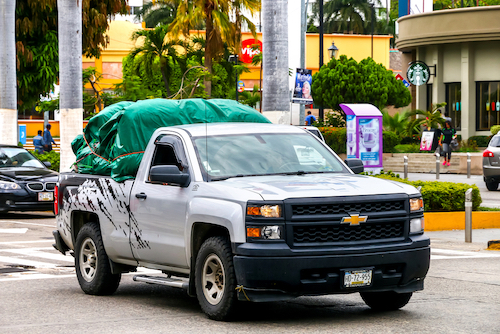
Pickup truck owners love that their vehicles often pull double duty, lending a hand hauling and loading, and then as a family vehicle. It’s that capability and freedom that makes trucks so popular.
But some trucks are purchased to be workhorses. That’s their main responsibility. In fact, most owner’s manuals for trucks have two service intervals, one for regular truck use and one for off-road or heavy use
.
For the off-road user, truck maintenance typically requires shorter maintenance schedules than regular use trucks.
Here we review what off-road or heavy use trucks need to stay in top condition well past the 100,000 mile mark.
Lubricants and Fluids
Trucks that haul and tow on a regular basis experience more wear and tear than a truck with regular use.
However, clean fluids reduce significantly the amount of wear and tear the vehicle experiences.
Here are our general recommendations of when these fluids should be checked and/or changed if you own a heavy use truck. Always check the owner’s manual for specific recommendations.
There are a lot of options when buying truck fluids, but our recommendation is to follow what the manufacturer recommends for your vehicle.
Engine oil
Engine oil life can be cut in half if the truck is working in rough, dusty conditions. It’s for that reason the oil level and quality should be checked once a month to preserve the life of the vehicle.
If you own a gas-powered truck and the oil color is black, it probably needs changing. For diesels, oil turns black quickly and is not necessarily an indication that the oil needs to be replaced.
Usage and mileage are always the best indicator of when to change the oil. The oil filter should also be changed at the same time the oil is replaced.
Coolant
Generally, your coolant should be checked at least twice a year before winter and summer. For off-road trucks, the rules are a little different. Check the coolant when you get the oil changed.
Old or dirty coolant prevents the corrosion inhibitors from working as they should.
Power Steering and Brake Fluid
While power steering and brake fluid can last a long time, moisture and heat can affect the quality of both fluids. Heat degrades and water causes rust.
If either absorbs water or becomes overheated for an extended time, they should be replaced.
Check both fluids with every oil change.
Transmission Fluid
This fluid cools, protects, and allows the transmission to work properly. So it’s vital that transmission fluid remains clean.
If the fluid is dark, black, or smells burnt, it’s time for a change. You should also change the transmission filter regularly, too.
With off-road trucks, check this fluid with every oil change.
Differential Oil
Differential oil ensures that the differential, part of the drive train, stays in peak working condition.
Consult your owner’s manual for when you should change this oil. Usually, it’s between every 30,000 to 50,000 miles.
For heavy use trucks, it’s important to stay on top of when to change this oil. Lack of differential oil can cause metal-on-metal contact which creates friction. It will also wear down surfaces and weaken gears.
Check it with your oil change to ensure there are no leaks and that the oil is clean.
Other Off-Road Checkups
For off-road trucks, add these hardware checkups to your list.
- Suspension — When heavily used, the suspension can run the risk of sagging or breaking. Inspect it before or after hauling heavy loads. Also check the springs for possible cracks. Make sure bolts are tight and shock absorbers aren’t leaking.
- Steering — Loose steering components can cause a loss of control for the driving, even resulting in what is known as “death wobble.” Check steering components with your regular oil change. Grease ball joints to keep them well-lubed.
- Spark Plugs — Usually last between 60,000-100,000 miles. However, checking them regularly allows you to look inside the engine. If you find any oil on the spark plug, or it’s blackened, there’s most likely an oil leak. If it’s exceptionally clean, there could be a head gasket leak letting coolant into the cylinder.
- Brakes — With heavy loads or stopping hard, brakes wear out faster. With every tire rotation, check brake pads and shoes for wear.
- Air Filter — Change the air filter whenever it gets dirty. With off-road trucks, that could be more frequently, depending if the vehicle is consistently used on extremely dusty roads.
- Frame — Yes, the frame is the biggest and strongest part of your truck, but frames can crack, bend, or rust, if neglected. For trucks that regularly tow heavy loads, it’s important to inspect the frame where the trailer hitch receiver attaches near the bumper or under the bed.
Regular truck maintenance is key to the long life of your vehicle. Taking a few minutes to regular check it can save you frustration, time, and money in the long run. When you’re ready to buy or sell a pickup truck, turn to the pros at Joe Bowman Auto Plaza. We’ve been helping truck lovers like you find the right fit for your life and budget.
Transmission Fluid Leaks: Causes and Fixes
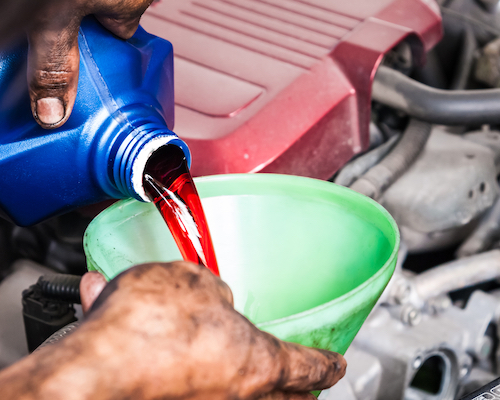
Leaks are never good. Doesn’t matter what it is. The sooner you get the leak fixed, the better!
That’s definitely true with transmission fluid leaks. A transmission leak is one of the worst leaks you can have with your car causing a hefty auto repair bill.
That’s because your transmission fluid serves a lot of automotive purposes such as lubricating mechanical parts, cooling, preventing oxidation, maintaining fluid pressure, preventing rust, and conditioning the gasket.
But the primary function is lubrication. Without it, your vehicle won’t function properly, if at all.
How Do You Know If You Have A Transmission Fluid Leak?
There are some half dozen fluids that keep your car running such as power steering fluid, engine oil, brake oil, and coolant. So how do you know the leak you have is with your transmission?
For starters, transmission fluid is usually either pink or red in color. As it circulates in your car, truck, or SUV, that color changes due to dust, dirt, and debris that gets mixed in with it.
If transmission fluid hasn’t been changed in a long time, it can look brown or black. However, some antifreezes are pink in color, so this is not a foolproof way to identify the leak, but it does narrow down the list of suspects.
If you’re still not sure even with a color check, test the consistency and the smell. Because transmission fluid is a lubricant, it will feel slippery to the touch and the texture will be oily.
Additionally, transmission fluid has a petroleum smell to it. If it hasn’t been changed in some time, the fluid will smell burnt.
Another way to check is by the location of the leak. Your vehicle’s transmission runs from the center of the vehicle to the front end. So if there’s a puddle in the middle of where the car sits, there’s a good chance that it’s your transmission fluid.
Another Big Clue of A Transmission Fluid Leak
A puddle under your car isn’t the only clue, but how your car drives is! For manual transmissions, shifting will become harder, even stuck. For automatics, the signs are more subtle because you are not manually shifting gears.
However, when you do move your car into a different gear, you’ll notice a vibration and that your transmission is working harder to make the gear shift change. Both of these scenarios occur when transmission fluid is low.
You might also find that your vehicle doesn’t start as quickly as it once did. If you’re completely out of transmission fluid, you won’t be able to shift at all.
Causes of Transmission Fluid Leaks (And Fixes)
There are several causes of transmission fluid leaks. We’ve listed the top offenders here as well as how to fix them.
Bad Transmission Gasket or Pan
The number one suspect of a transmission fluid leak is your fuel pan gasket which houses your transmission fluid. Vehicles with automatic transmission have this.
With time, the seal between the transmission and the pan can deteriorate, corrode, crack, wear off, fall apart, or even dissolve. When that happens, you’ll see a leak when the vehicle is parked.
Some vehicles use a seal instead of a gasket. But even these will wear thin over time and cause leaks. In either case, you’ll need to get the component replaced.
Cracked or Corroded Transmission Pan
Gaskets aren’t the only component that can leak. So can your transmission pan which holds the transmission fluid. As it ages, the pan can develop cracks or tiny holes causing the fluid to seep.
Another cause of a transmission pan leak is the sudden impact of a sharp object. When that happens, the best course of action is to replace the pan. For safety reasons, salvaging is not an option.
Transmission Drain Plug Leak
Not a common problem with automatic transmissions, a transmission drain plug leak is fairly common with manual transmissions. Sealed with an O-ring, the drain plug is used to drain transmission fluid.
When you change the fluid, replace the seal. If you don’t, and you use the old seal, it will wear off. It’s a best practice to change the seal every time you change the transmission fluid. The good news is you only need to replace the O-ring.
Damage to Fluid Lines
Fluid lines, common in vehicles with automatic transmissions, are usually made of steel which makes them prone to rust. Rusting can cause cracking, create holes, or even cause lines to snap.
Since fluid lines run to the transmission cooler, they are vital to the health of your car. Come into our service department and have our Chevy certified technicians confirm that it is a fluid line leak. We can then replace it.
Clogged Pipes
If the transmission fluid hasn’t been changed in a while, it will accumulate dirt and debris. That, in turn, can cause circulation disruption leading to clogged pipes.
Follow the instructions in your owner’s manual as to whether you flush or replace the fluid.
A Man-Made Cause: Bent Transmission Pan
If you try to replace transmission fluid yourself but have a hard time removing the sealant, you can bend the pan. That’s because steel transmission pans are generally weak; they bend easily.
Once the pan is bent, it will not create a seal around it. Without a seal, gaps are created causing fluids to escape. Replacing the pan is the best option.
Be Proactive: Prevent Transmission Fluid Leaks
Prevention is always the best way to avoid costly auto repair! That’s why it’s best to check all fluid levels routinely and maintain them. This won’t prevent transmission fluid leaks but if you are vigilant with checking it, you can uncover low levels.
Low levels are an indicator of a leak. Check regularly!
Change fluid levels at the intervals recommended in your owner’s manual. Staying proactive and replacing fluid regularly helps you to keep a healthier, long-lasting vehicle.
Joe Bowman Auto Plaza is a Harrisonburg, VA car dealer that sells Chevrolet and GM vehicles, along with quality Carfax preowned vehicles. Stop by or shop online!
7 Tips to Maintain Your New Car

One of the big advantages of buying a new car is that it needs less frequent maintenance service. Older model cars require a seasonal change of spark plugs, condenser, and breaker points.
And body rust? That was considered part of an aging vehicle.
With today’s new cars, the amount of maintenance you need to do has decreased. Spark plugs can go as long as 100,000 miles before they need changing.
Points and condensers are a thing of the past with the invention of electronic ignition. Suspensions, chassis, and even some transmissions are lubricated for the life of the vehicle.
As for body rust, car manufacturers usually have rust-through warranties lasting an incredible six years, if not longer!
These kinds of technological advancements make new car ownership easier than ever. Still, it’s not a free ride.
You’ll want to make sure these seven easy maintenance checks are performed regularly over the life of your car to keep it in tiptop shape!
Check the Oil
Clean engine oil is the lifeblood of your vehicle! Checking it monthly helps to ensure the health of your engine. Just make sure the vehicle is parked on level ground for an accurate read.
Inspect Exhaust System
Check your exhaust system while getting your oil changed. Have your mechanic look for rusted through exhaust parts that need replacing. Check for loose clamps.
Check the Air Filter
When you’re checking your oil, give a quick check of your air filter, too. If you can’t see light through it, it’s time to replace it.
Check Tire Pressure
Check tire pressure when the tires are cold for the most accurate reading. Follow the tire inflation guidelines in your owner’s manual NOT the maximum pressure listed on the tire sidewall.
This is a good time to also check your tires for uneven or abnormal wear, cuts, or bulges. If tires need replacing, do it as soon as possible.
Tires are the foundation of your driving experience. Good tires help to keep you safe on the road!
Wash Your Car
If possible, wash your new car every week. Make sure to hose out the fender wells and wash the undercarriage to further remove road salt and dirt. When the water beads on your car become large than a quarter, it’s time to wax it!
Check Fluids
For many newer cars, the automatic transmission is sealed. If yours is not sealed, you can check the transmission dipstick. Make sure the engine is warmed up and running when performing the check.
You’ll also want to check the power steering and brake fluid levels for leaks.
Check Battery
Check battery terminals for corrosion and to make sure the cables are securely fastened. If your battery has caps, remove them to check fluid levels. This only needs to be done every few months.
Beyond Monthly New Car Checks
As your car ages, you’ll want to do the following maintenance every two to four years:
• Change the automatic transmission fluid
• Replace drive belts, hoses
• Drain and flush the cooling system
• Change the timing belt
• Replace drive belts and hoses
Taking a proactive approach with your vehicle will save you money and time in the long run.
Remember to always follow your owner’s manual for specific instructions on when to have these inspections performed.
When you’re ready to buy a new or used car, turn to the pros at Joe Bowman Auto Plaza. We’ll help you find the right vehicle for your lifestyle and budget.
7 Reasons to Love the 2022 Chevy Silverado ZR2

From off-road adventures to navigating the city, the 2022 Chevy Silverado ZR2 takes on whatever you throw at it.
Not only does it feature animated headlights, a new front fascia, and a 13.4-inch touchscreen, but this new truck also offers hands-free driving technology, and an updated electronic shifter.
These are all great features that admittedly make us a little giddy. However, the following seven features seal the deal for us.
Accident Bumper Replacement
In the event that your Silverado ZR2 faceplants with Mother Nature, you’ll find that the front bumper is easy to replace. Chevy designed large plastic end caps for that very reason.
Multimatic Dampers
Chevy’s multimatic shocks give the ZR2 more suspension, and it uses three separate spool valves that allow the truck to keep up with a changing terrain.
Additionally, Chevy installed ZR2-specific coil springs for the front of the vehicle and leaf springs for the rear. You can just imagine the ride quality!
Daytime Running Lights
On the front fascia of the Chevy ZR2 are wing-shaped running lights with an animated lighting sequence for approach and exit.
While this feature is available on the 2022 Chevy Silverado 1500 LT trims and above, the ZR2 is the only model to get extra LED light crumbs on the grille.
Flowtie
First introduced on the 2014 track car, the Flowtie helps cool engine and oil temperatures. Basically, the Flowtie—a riff on the brand’s signature bowtie—was created by removing the gold center of Chevy’s emblem which sits on the truck’s grille.
This simple design increases the grille’s effective open area, allowing an additional three cubic meters of air per minute to slip under the hood. That, in turn, reduces engine and oil temperatures.
The ZR2 also boasts a 420 hp 6.2-liter V8 with 460 pound-feet of torque. The maximum towing capacity is 8900 pounds!
33 Inch Tires (and What They’ll Do)
Larger tires—an inch larger than the Silverado Trail Boss—means the Chevrolet Silverado ZR2 has more ground clearance. And with the Goodyear Wrangler Territory MTs, these tires are built for durability and traction without creating a major howling noise on the highway.
Locking Differentials
With big tires and more ground clearance means more room for fun on the off-road. The good news is with front and rear e-lock differentials, you’ll get out of a sticky situation easier.
Dual Mufflers
Hidden under the rear bumper of the ZR2 are dual mufflers. These mufflers are specifically designed to help prevent damage to exhaust components and to help with departure angles. They are especially handy when you’re trying to climb out of a rocky terrain.
We told you the updates were impressive. But that’s not all! The interior has its own set of impressive additions.
Chevy has added a 13.4-inch touchscreen infotainment system as well as Google’s voice assistance, maps, Wi-Fi, and Apple CarPlay and Android Auto.
With leather-trimmed seats and sporty dark trim, comfort is A+. The ZR2 has a crew-cab body style, so you’ll have plenty of passenger space, especially in the backseat.
From workhorse to luxury ride, the 2022 Chevy Silverado ZR2 offers everything you could want. Stop in at our Harrisonburg, VA car lot and test drive one today!
Joe Bowman Auto Plaza has been serving the Harrisonburg,Charlottesville, Staunton, and Winchester, VA for 60+ years. Stop in to see us today!
Car Maintenance Checklist by Mileage
Whether you buy a new car, or a quality used car, maintenance is the name of the game to get the most miles out of your vehicle.
That means there are maintenance milestones by mileage you need to be aware of that require different types of services.
Here are our recommendations.
Car Maintenance: 3,000 Miles Checklist
At every 3,000-mile interval, check tire pressure and all fluids. If any of your fluids are low, top them off. Be sure to clean your backup camera lens as well.
Car Maintenance: 5,000 Miles Checklist
To ensure even tire wear, get your tires rotated and balanced every 5,000 miles. Also inspect your air filter. If it needs it, replace it. If you drive through dusty conditions frequently, you’ll definitely want to keep tabs on your filter wear.
Car Maintenance: 6,000 Miles Checklist
It’s not just what’s under the hood you need to protect but also the exterior! Get your car waxed every 6,000 miles to help protect the finish. Make it a habit to also check all interior and exterior lights, turn signals, headlights, and brake lights. Replace if needed.
It’s also a good idea to check wiper blades and replace as needed.
Car Maintenance: 15,000 Miles Checklist
Check brake pads at the 15,000-mile mark. Replace, if needed. And you’ll want to have the rotors turned as well. Check your air filter, too.
Car Maintenance: 30,000 Miles Checklist
Once your vehicle reaches 30,000 miles, there are several systems to check:
• Inspect radiator coolant and have the cooling system flushed.
• Drain the power steering fluid and have it flushed and replaced.
• Replace fuel filter.
• Check tire tread. Is it time to get a new set?
• Inspect all suspension components.
• Check all hoses and belts for cracks. Replace as needed.
• Test the air conditioning system and recharge according to factory specs.
Car Maintenance: 50,000 Miles Checklist
If you have an automatic transmission, at the 50,000-mile marker, it’s time to drain and replace the transmission fluid.
For manual transmissions, the transmission differentials need to be drained, cleaned, ad refilled with new fluid.
It’s also time to check the battery for signs of leakage. Test it to make sure it’s recharging properly.
Check the ignition system including your vehicle’s spark plugs, spark plug wires, and the alternator.
Car Maintenance: 60,000 Miles Checklist
At the 60,000 milestone, it’s good to perform the same maintenance you did at 30,000 miles. We recommend you also replace all belts and hoses, too.
Car Maintenance: 100,000 Miles Checklist
At this mileage point, it’s a good idea to have all of the services mentioned here performed. Get new spark plugs and spark plug wires if you have not already replaced them.
The key to the long life of your vehicle is a partnership between you and your trusted mechanic. Allow our Chevy certified technicians to advise you for all of your mechanical needs.
Their expert car maintenance recommendations and service will help to keep your vehicle running beautifully!
5 Benefits of Buying A Used Truck

Over the years, owning a truck has become a more versatile choice for consumers. Once used mostly by farmers and construction companies, today, trucks perform a wide range of duties such as daily commuting, heavy duty towing, off-roading terrain and camping, to name a few.
If your budget won’t allow you to buy a new truck, consider buying a used truck, but not just any pre-owned truck. Here are five reasons to buy a good used truck through our Harrisonburg, VA dealership.
Reliability and Dependability
Trucks are more durable than ever. With regular maintenance and care, the life of a truck can average 200,000 miles compared to the previous standard of 100,000 miles.
Used Trucks Are More Affordable
It’s no secret that new trucks can be pricey especially if you want a lot of bells and whistles.
The good news is many pre-owned trucks offer the performance and features you want but at a lower price.
Lower Depreciation
When buying a used truck, you avoid paying for the initial depreciation every vehicle goes through when it’s first sold.
By comparison, a new truck generally loses about 20% of its value once it’s sold. With a used truck, there is no initial depreciation.
By saving thousands buying a used pickup, you also free up more money in your budget.
Insurance Rates
One of the big factors in determining your truck insurance rate is the value of your vehicle in case there is ever an accident.
With the cost of depreciation on a new truck, the premium can be high. And it usually remains high for several years.
That’s why you’ll generally find insurance rates on used trucks more attractive than new trucks. There is no initial depreciation.
The Carfax Advantage Program
Carfax, the industry’s leading vehicle history expert for the used car market, has provided trusted information on vehicle histories since 1986.
That’s why our Harrisonburg dealership is a subscribing Carfax Advantage member. We sell quality Carfax used vehicles.
Should you ever have a question regarding the history of a vehicle you’re thinking about purchasing, our salespeople can access the Carfax Report to make sure everything checks out with the prospective vehicle.
We then give this information to you, the customer, so that you can review it as well. Our job is to help you make an informed decision about the truck you want to buy.
Besides the tremendous reassurance that Carfax vehicles offer the consumer, every vehicle on our lot must also pass a 75-point inspection, or we will not offer it for sale.
Additionally, we provide a limited warranty on our vehicles. Depending on the mileage and the year of the vehicle, we provide 30- or 90-day warranties.
When you’re ready to buy a quality used truck, turn to the pros at Joe Bowman Auto Plaza. We’ll help you find the truck that fits your lifestyle and budget!
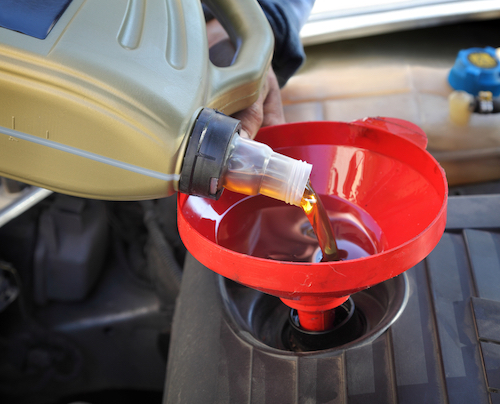
Maintenance of your vehicle is critical to its ongoing, steady performance. And chief among those maintenance tasks is changing your car oil.
But how often do you change it? When is the right time to change it? What type of oil does your vehicle need? Because car oil has changed so much the answer to these questions might surprise you!
Here’s what you need to know for good used car and new car maintenance.
When to Change Your Oil
It doesn’t matter whether your vehicle is used or brand new, you still need to make use of your owner’s manual! Don’t make assumptions on when to change your oil based on past experiences because the recommendations have all changed.
Many vehicles now have service reminder monitors that alert you when it’s time for an oil change. Consumer Reports’ chief mechanic, John Ibbotson says, “These systems typically monitor the number of miles a vehicle has traveled, and they also sense how hard the car is being driven and adjust accordingly.”
If you don’t have a service reminder monitor, the rule of thumb has been every 3,000 miles or every 3 months. Due to advances in engines and car oil, that guideline is now obsolete.
The new guideline recommends an oil change every 7,500 to 10,000 miles, and six or 12 months as an average time.
But it’s not just about mileage.
Oil, as it ages, becomes less effective. For vehicles that are parked more than driven, not having a warm engine for the oil to circulate can cause excess moisture to form in the engine. That moisture does not get removed, and that can lead to a shorter life for your engine.
So even if you don’t drive your vehicle often, change the oil at least twice a year.
How Often to Check Your Oil
Consumer Reports has found through their reliability survey that even newer cars can need to have the oil topped off between changes.
That’s why we recommend a monthly oil check. If you find a leak, get it repaired immediately. When you do this check, pay attention to the color of the oil which should be brown or black.
If it has a light, milky appearance, there could be coolant leaking into the engine. You also want to check for any metal particles as it could signal internal engine damage.
Choose the Right Oil for Your Vehicle
With many newer vehicles, the weight of the motor oil is printed on the cap. If you have an older vehicle and weight is not printed on your oil cap, check your owner’s manual for instructions.
Here at Joe Bowman Auto Plaza, our Chevy certified technicians can help you determine just what your vehicle needs.
For example, one of the questions our technicians are asked is, “I have an older vehicle. Do I need a special oil for it?” Their answer is if your vehicle is running well with its current oil, don’t change it. You most likely don’t need it.
Just keep an eye on your vehicle’s performance. If it changes, bring it in to be evaluated.
What About Synthetic Oil?
Synthetic oil is relatively new to the marketplace. It is designed to last longer by resisting oil breakdown, and it can withstand high temperatures. The downside is it’s more costly.
Generally speaking, you only need synthetic oil if the manufacturer calls for it.
That said, there are some situations where that resistance to oil breakdown can prolong engine life.
For example, if you make a lot of short trips, standard motor oil may not get warm enough to burn off impurities and moisture. That means the oil can’t do enough to protect your engine.
If you live in a climate with very cold winters and very hot summers, synthetic oil may be a better fit. Again, consult your owner’s manual.
As with any used car and new car maintenance, you want to tailor your maintenance to the needs of the car.
For expert car care, turn to the Chevy certified technicians at Joe Bowman Auto Plaza. We’ll keep your car in tip top shape.
Learn more about us here.
Auto Safety: Why You Want A Car That Crumples

Vehicles today aren’t made the same way they were 60 years ago. And that’s a good thing.
Back then, auto designs were rigid. That was good for the car—causing less damage—but not for the people occupying them.
This type of construction was deadly for passengers because the impact force went straight to the inside of the vehicle, to the passengers.
It wasn’t until 1953 that a Mercedes-Benz engineer studied the problem and came up with a prototype for our current crumple technology.
What Is A Crumple Zone?
According to Newton’s first law of physics, an object in motion will stay in motion unless intervened by an unbalanced force.
And that’s exactly what happens in an accident. If a car is moving at 50 mph and it suddenly crashes causing the vehicle to stop, the passengers will continue to move at 50 mph.
However, with today’s vehicles, the impact will not be a rigid one. Instead, the vehicle will crumple. This does cause more damage to the vehicle, but the severity of personal injury is less.
Crumple zones, usually located in the front and rear of a vehicle, act as a buffer around your car, helping to cushion the collision blow by extending deceleration time so your vehicle can stop more slowly, relatively speaking.
Even a few seconds delay in impact can mean the difference between life and death.
How Crumple Zones Are Made
There are different crumple zone designs. For example, a simple crumple zone design would include frame segments that collapse on themselves or bend in particular areas of the vehicle.
More advanced designs include the use of metals and other materials engineered specifically to absorb as much energy as possible.
High performance vehicles typically follow a honeycomb design which under normal circumstances is stiff, but during a collision can collapse and crumple.
Specific designs and materials vary by manufacturer and by vehicle weight and size. However, manufacturers share the common goal of finding the perfect balance between too much and too little impact resistance.
How Crumple Zone Technology Works
When there is an accident, a vehicle’s crumple zone helps to transfer some of the kinetic energy into a controlled impact.
Crumple zones crush like an accordion, absorbing some of the collision impact. The vehicle’s front acts as a cushion that slows the time it takes for the vehicle to stop.
This lowers the average impact force and increases survival space for belted passengers.
Other Auto Safety Features
Today, auto safety is better than ever thanks in large part to crumple zone technology. But along with it, there are other improvements that are saving lives on the road every day.
These include interior features that are designed to be more flexible such as seat belts, air bags, and head restraints.
Newer cars now come equipped with ESC, electronic stability control, which helps to detect when a skid is about to occur. The system selectively applies the brakes to different wheels allowing
greater driver control.
In short, thanks to innovative technology, cars are safer today to drive than they’ve ever been!
When you’re ready to buy a new car or a quality used car, turn to the pros at Joe Bowman Auto Plaza.
Find a new Chevrolet or a quality Carfax pre-owned vehicle. We’ve been helping people just like you for 60+ years find the vehicle that’s right for your budget and lifestyle.

Every vehicle, whether it’s a new car or a used car, is dependent on a cooling system to keep it from overheating. Briefly, your cooling system is a circular system that takes antifreeze and moves it through the engine block and heads.
As the antifreeze, or coolant, moves through the passages, it picks up heat from the engine and then it flows back to the radiator, which cools it.
Even with the best car care, problems can arise with your coolant system. While you hope it does not happen, it’s best to know the five signs of coolant system problems.
Recognizing these symptoms can get you out in front of the problem, saving you money in expensive repairs.
Engine Overheats
This can occur when any of the part of the cooling system fails to do its job. When the engine runs hotter, a red water temperature warning light will come on. Never ignore this prompt!
Pull your vehicle over to the side of the road immediately and call for a tow. If you ignore the warning sign, you could damage your engine.
Noticing Coolant Under the Front of Your Vehicle
Coolant leaks tend to be pastel blue, yellow-green, or a fluorescent orange. It all depends on the type of antifreeze you use in your car. If your vehicle is leaking coolant, schedule an appointment to get your cooling system checked right away.
Smelling Antifreeze
If you smell antifreeze while driving or when the engine is still hot after driving, most likely, there is a leak. The leak could come from the radiator, a hose, water pump, or thermostat housing. If this happens, get the vehicle to a qualified mechanic right away.
Continually Adding Coolant Regularly to the Radiator
If you find you must add coolant regularly to the radiator, there’s a leak! Radiator leaks can cause rapid overheating. Thus, affecting the radiator’s ability to cool the engine.
If a rock or some other debris puts a big hole in the radiator, you’ll probably need to replace it.
Thermostat Failure
Your thermostat regulates the temperature of your engine and controls the amount of coolant allowed to flow into the radiator.
When your engine is hot, the thermostat opens wide to allow for maximum cooling. Conversely, when the engine is cold, the thermostat stays closed. This allows the engine to warm up to an optimal temperature faster.
The proper functioning of your thermostat cannot be overstated! If it malfunctions, the health of your engine is at grave risk.
Pull over and have your car towed to your mechanic.
These five warning signs should always be taken seriously. Never ignored.
Here at our Harrisonburg, VA car dealership, Joe Bowman Auto Plaza’s service department can assist you with any other mechanical problem you may have, including coolant system problems.
In business for 60+ years, we only hire Chevy-certified technicians. Highly skilled, these technicians can quickly identify the problem and get your car safely on the road again.
Learn more about us here. Or stop by our Harrisonburg, VA car dealership and meet our friendly team!
Connect with us

- April 2023
- March 2023
- February 2023
- January 2023
- December 2022
- November 2022
- October 2022
- September 2022
- August 2022
- July 2022
- June 2022
- May 2022
- April 2022
- March 2022
- February 2022
- January 2022
- December 2021
- November 2021
- October 2021
- September 2021
- August 2021
- July 2021
- June 2021
- May 2021
- April 2021
- March 2021
- February 2021
- January 2021
- December 2020
- November 2020
- October 2020
- September 2020
- August 2020
- July 2020
- June 2020
- May 2020
- April 2020
- March 2020
- February 2020
- January 2020
- December 2019
- November 2019
- October 2019
- September 2019
- August 2019
- July 2019
- June 2019
- May 2019
- April 2019
- March 2019
- February 2019
- January 2019
- December 2018
- November 2018
- October 2018
- September 2018
- August 2018
- July 2018
- June 2018
- May 2018
- April 2018