




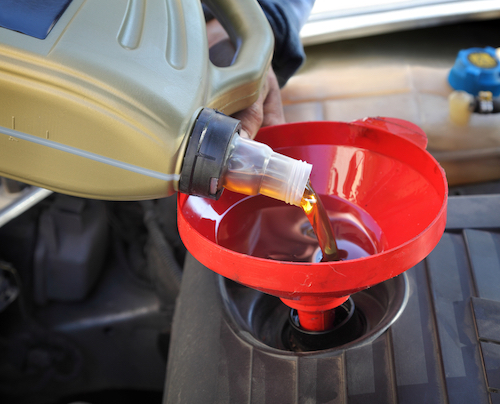
Motor oil is crucial for your vehicle’s smooth running and long lasting performance. But the world of motor oils has become a bit more complex. Today, we have three main types of motor oil to choose from: conventional, synthetic, and synthetic blend.
Should you use synthetic oil instead of conventional? If you’re still trying to understand the vast difference between the two, this article will answer your questions.
The Difference Between Conventional and Synthetic Oil
Conventional oil is essentially refined crude oil pumped from the ground. It’s found in nature in areas like underground reservoirs and tar sands.
Synthetic oil is completely man made. That means it has fewer imperfections in its chemical buildup than does conventional oil. Companies that produce synthetic oil have spent a lot of time and money to create a product that can outperform nature’s crude oil counterpart.
Synthetic blends, called semi-synthetics, add synthetic additives to regular oil. While semi-synthetics are not as protective as a full synthetic oil, it does provide some of the benefits. And, it can be a nice compromise between the two.
What is Synthetic Oil Made Of?
First invented in 1929, synthetic oil is made—molecule by molecule—from chemical compounds using some of the best properties found in regular, conventional oil.
To further understand the differences in the two products, you need to know the pros and cons for each.
Conventional Oil: The Pros and Cons
Conventional oil pluses are:
• It is a cheaper solution for motor oil than synthetic
• It’s fairly easy to produce allowing for wide consumer availability
• It’s designed by nature to act as a reliable lubricant
Conventional oil cons are:
• It doesn’t always provide the protection your engine needs in certain conditions
• It doesn’t last as long as synthetic oil prompting more oil changes
• Conventional oil is seen as less eco-friendly than synthetic oil
While it is an affordable option, you potentially have to change the oil more often. This makes conventional oil worse for the environment.
Synthetic Oil: The Pros and Cons
Fans of synthetic oil feel that it is the clear choice because of its benefits. But just like conventional oil, there are pros and cons. Synthetic oil pluses are:
• Designed to provide better all-weather engine protection, and it can stand up to almost anything thrown its way
• Don’t need to change it as often as conventional oil
• It can help improve fuel economy
• It can help clean out deposits and sludge that build up in the engine
Disadvantages of synthetic oil are:
• It costs a lot more than conventional oil. Some synthetic oils can cost as much as four times that of conventional oil
• For newer vehicles that haven’t been broken in, it’s not always the best choice
• When consumers don’t take the time to understand the right way to dispose of it, it can cause a lot of pollution
These are some of the basic differences between synthetic and conventional oil. But it’s worth taking a deeper dive into the world of synthetic oil to understand its deep performance value.
Does Synthetic Oil Last Longer Than Conventional Oil?
Generally, most mechanics will tell you to change your conventional oil between 3,000-5,000 miles. This helps you avoid driving with dirty or low oil.
With synthetic oil, you can go as long as 7,500 miles before replacing the oil. That alone can counteract the cost of purchasing synthetic oil.
Is It OK to Switch from Conventional to Synthetic Oil?
Switching to a synthetic oil can be a smart move. While it does have a higher price tag, it performs in a wide range of temperatures. And, it’s ideal for vehicle engines that have variable valve timing, direct injection, turbochargers, or superchargers.
You don’t have to do anything special to make the switch. In fact, your engine won’t even notice the change. If you decide you want to switch back to conventional oil, you can.
That said, the motor oil that’s best for your vehicle is the one the manufacturer recommends.
Synthetic Oil vs Conventional Oil: Older Cars
Is it okay to use synthetic oil in an older vehicle? And by older, we mean any vehicle manufactured before 1990, or thereabout.
While synthetic oil is safe to use in late model vehicles, exercise caution with older vehicles. Seals and other components aren’t as tight, and the risk is the oil could leak out causing loss of oil or burning.
However, there is one caveat. If the older vehicle has been well-maintained and is in excellent condition, synthetic oil can protect and prolong the vehicle’s life.
If you’re unsure, check with your mechanic for the final say.
Will Synthetic Oil Make Your Engine Last Longer?
Because it has less imperfections, synthetic oil lubricates better than conventional oil. It also improves mileage, taking longer to break down under the engine’s heat.
Synthetic Oil vs. Synthetic Blend: What’s the Difference?
A full synthetic oil is composed of all man made materials while a blend is not. This type of all contains a mix of conventional motor oils and a synthetic base stock.
While a synthetic blend does not provide as much protection as a full synthetic oil, it does offer up more protection than conventional oil. It will help to protect your engine better than conventional oil.
It’s generally agreed that a full synthetic oil is the very best choice with a blend coming in as a second best choice.
Conclusion
In the debate of synthetic vs conventional motor oil, which one to use, the goal is always to make your engine last longer. A synthetic oil solidly delivers on performance by increasing the life of your engine.
A synthetic blend will offer up more protection than conventional but less protection than a full synthetic.
As always, follow what your owner’s manual recommends!
When your vehicle needs servicing, turn to the Chevy certified technicians at Joe Bowman Auto Plaza. Our highly trained technicians work on all kinds of vehicles every day.

The road isn’t always smooth which is why so many truck owners turn to the Chevy Silverado. It has the off-road capability you need off the beaten path, which is why it’s in demand now more than ever.
So how can it make your life easier? Here’s how America’s favorite truck stacks up.
Strongest Silverado to Date
There’s over 100 years of truck building know-how that has gone into creating the 2021 Silverado. The result?
This year’s Silverado is not only bigger and stronger, but it’s lighter than the previous generation.
Fuel Efficiency and Engine Choices
No one needs to tell you that gas is expensive. That’s why fuel efficiency—without compromised truck power—is incredibly important. With the 2021 Silverado, you get a choice of six engine options including the best in class 6.2L V8 for power and towing.
But there’s also the Duramax 3.0L turbo diesel, America’s most fuel-efficient truck to date with 23 MPG in the city and 33 on the highway!
This is the result of a perfectly balanced inline six configuration as well as advanced features like the Hydra-Matic 10-speed transmission which has shorter gears for the best efficiency. The Silverado diesel also offers an advanced stop-start technology.
You can choose the right combo of efficiency and power for your everyday needs.
Duramax: Efficiency and Power
When you invest in a Silverado diesel, you’re combining the best of both worlds, truck power, and efficiency.
Besides fuel efficient gas mileage, Duramax 3.0L Turbo-Diesel I-6 also offers:
• 277 horsepower and 460 lb-ft of torque
• 9,500 lb. max towing capacity
• 10-speed automatic transmission
• Auto stop/start technology
• Quiet ride as well as powerful
These features are available on the LT, RST, LTZ, and the High Country. The Silverado Diesel also features advanced combustion technologies which help to optimize performance and efficiency while reducing odor and noise.
Tow with Confidence: Camera Technologies
Towing is about having the right amount of power so you can handle the heavy loads. But where would you be without camera technology to guide you?
The 2021 Chevrolet Silverado offers best-in-class camera technology with 8 available cameras that offer up 15 unique views—more than any other competitor.
Four Available Hitch Views
• Hitch View—Gives a close-up view of the receiver hitch for a precise connecting alignment.
• Surround View—Provides a top-down bird’s eye view of your truck’s surroundings.
• Rear Top-Down View—Shows the driver the clearance between truck bed and nearby objects.
• Bed View—Shows you the cargo bed to help with fifth wheel or gooseneck hitching. Can also briefly check on cargo.
New additions for 2021 are the Cargo Bed Zoom and the Bed Hitch Guidance.
Six Available Driving Views
• Transparent Trailer—Driver can virtually “see through” a conventional camping trailer or hitched box.
• Front Camera View—Shows a front view with available guidelines to help with tight maneuvers and parking.
• Pic-in-Pic Side View—This camera view combines two views into one, the Rear Side View and the Rear Trailer View. (Requires available accessory camera)
• Inside Trailer View—Monitor your contents or cargo with an available Chevrolet Accessory Camera that can be installed in the trailer.
• Rear Trailer View—Using an available accessory camera installed to show vehicles or objects behind the trailer, get trailer guidance and trailer angle indicators.
• Rear Camera Mirror—With an available dual-function camera-based rearview mirror, you’ll see a wider, less obstructed view than with a traditional rearview mirror.
Five Available Parking Views
• Rear Camera View—Shows the rearview to assist with tight maneuvers and parking.
• Front Side View—Displays the front tire position for tight maneuvers and parking.
• Rear Side View—Through a split screen, displays a line of sight down each side of the truck and trailer. Includes automatic biasing view in Drive and Reverse, and a turn signal-activated Trailer Length Indicator. When this is enabled, it displays an overlay twice the length of the trailer. It shows you when other vehicles are present. May interfere with your lane change.
• Front Top-Down View—Shows a top-down view of the hood, bumper, and front tires during tight maneuvers. Guidelines can be turned off or on as necessary.
• Bowl View—A rear-facing 3D surround view. This view is useful for low speed backing maneuvers.
With so many ways to tailor your truck needs to your everyday life, let America’s favorite pickup, the 2021 Chevy Silverado, do it for you confidently and in style.
Stop in at Joe Bowman Auto Plaza and test drive one today. We think you’ll see why so many truck owners love the Silverado!
New Car Buying Advantages: 5 Reasons to Buy New

Here at our Harrisonburg car dealership, Joe Bowman Auto Plaza sells both new and used cars. Each has its advantages depending on your lifestyle and budget.
For this post, we’ll focus on new car buying advantages.
You Choose What You Want
When you’re buying a new car or truck, you decide what you want on the vehicle. You decide the color and how you want the vehicle equipped.
Whether it’s cloth or leather upholstery, the audio and communication systems, you decide.
If you can’t find exactly what you’re looking for at our Harrisonburg car lot, you can special order your vehicle. This will take longer, and you may not be eligible for other perks. Talk to your sales consultant to be sure.
That said, our dealership has a wide variety of vehicles with the perks that so many people want. The vast majority of people buy directly from our lot.
Available Features
With a new car, you’re going to get the latest in new technology and features. For a used vehicle, you get the same perks, but those perks are limited to the year the vehicle was manufactured.
Additionally, with new car buying you’ll get the latest safest breakthroughs and the latest conveniences. Automotive electronics continue to evolve so fast that unless you buy a new car, your current automotive vehicle is outdated.
About Depreciation and Strong Resale Values
It’s true. One of the reasons consumers choose buying a used car over a new one is depreciation. But there is a caveat. Choosing to buy a new car that has a higher resale value—and higher consumer demand—can offset depreciation.
Choose a brand with a strong reliability rating and depreciates at a lower rate thereby creating stronger resale values.
Great New Car Financing Rates
Manufacturers offer great incentives for buying a new vehicle with low interest rates and cash rebates. Used car financing doesn’t offer these perks.
Additionally, financing rates may be a percentage point or two higher. In short, the cost of purchasing a used car is lower but the interest rate could be slightly higher.
About New and Used Car Warranties
Here at our Harrisonburg dealership, we offer warranties for both new and used vehicles. We stand behind what we sell!
For used vehicles, it’s a limited warranty of either 30 or 90 days, depending on the mileage and year of the vehicle.
For a new vehicle, there is a manufacturer’s warranty of one year. And, you will most likely have less repairs during the first few years of ownership.
Here’s the Bottom Line
While there are many new car buying advantages, there really is no right or wrong decision on buying a car. It’s all about lifestyle and budget. Here at Joe Bowman Auto Plaza, we will work with you to get you into the right vehicle that suits your needs!
When you’re ready to buy a new or newer vehicle, stop in to see us or shop online first. Then stop in for a test drive. Our experienced sales consultants will help you find what you need that’s within your budget.

You know the feeling…Your gas gauge has just lit up giving you a low fuel warning. Can you make it to the pump in time?
It happens to all of us at one time or another. Sometimes life gets busy and you forget how low your fuel has become, but driving on E is never good. Besides the fear of running out of gas on the side of the road, there are other serious factors to consider.
Does Running Out of Gas Damage Fuel Injectors?
Running out of gas can play havoc with your fuel delivery system. For example, if you’re driving a late model vehicle, then most certainly it is equipped with an electric fuel pump that fits in your gas tank.
This fuel pump uses gasoline in two ways, to cool and lubricate itself. With far less fuel to work with, the fuel pump cannot form these critical functions. That means it could overheat and fail.
We don’t have to tell you how expensive a fix that is! Worse, during the process of overheating, the fuel pump sheds debris that will get into your vehicle’s fuel system.
Almost all cars have fuel filters designed to catch debris before it gets to the fuel injectors. However, if your gas is extremely low and your fuel pump has no fuel to work with, debris will clog up the fuel filter.
Even if your fuel pump remains undamaged, it’s still possible that it will suck debris and sediment that’s gathered at the bottom of the gasoline tank into the fuel line.
That will clog the fuel filter, or worse, clog the fuel injectors. And even though you’ve now found a gas station and filled your tank, it will be difficult to re-start your car, and difficult to keep it running.
While a new fuel filter is generally an inexpensive fix, replacing or repairing clogged fuel injectors is not. You’re looking a tow AND a costly repair!
But let’s say you’re spared this travesty and no sediment or debris gets into your fuel line. There is the strong possibility that your fuel pump is drawing from an empty tank.
That means you’ll need to bleed the line before the car will start and run properly.
Don’t Trust the “Miles to Empty” Reading
Most late model cars will tell you how many miles you have left before your vehicle runs out of gas. Remember, this is an approximation based on the level of gas left and your fuel efficiency.
Fuel efficiency is based on your driving habits and your driving situation. So the reading can be misleading. If you’re stuck in traffic, you’ll consume more gas than driving on the highway.
An Ounce of Prevention is the Best Approach
Spare yourself the inconvenience—at the least—of frantically looking for the nearest gas station and paying a higher price.
And, at the worst, spare yourself the possibility of costly car repairs that could easily have been avoided with a fill up.
Instead, to avoid a low fueling warning light, always keep your vehicle at least one quarter full. That will at least give your fuel delivery system something to work with.
And really, just make it a habit to make a quick stop and fill up. That’s the easiest solution to a potentially pesky problem!
When you’re ready to buy a new or used vehicle, turn to the pros at Joe Bowman Auto Plaza. We’ve been helping folks just like you for 60+ years find the vehicle that fits their budget and lifestyle!
How Do You Winterize A Pickup Truck?
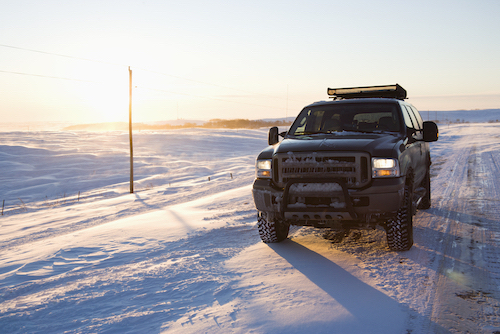
Winter is hard on vehicles, and it’s hard on even the toughest trucks. That’s why it’s important to winterize a pickup truck, preparing it against frigid temperatures, ice, and snow. How? By following these simple tips.
Antifreeze
Check your antifreeze to make sure you have enough. Just do it before wintry weather strikes. Most trucks work just fine on a mixture of 50/50 water to antifreeze ratio. This will protect your vehicle to -20 degrees below zero.
However, if you live in an area that regularly drops below zero, don’t assume that this is enough protection. Take the extra precaution of removing some of your radiator fluid and replacing it with antifreeze.
Not sure what the ratio should be for your truck? Ask your mechanic. Just remember to return to your summer blend when warm weather returns.
Tires
Because cold weather reduces tire pressure, make sure pressure is at the high end of the manufacturer’s recommendation. Follow the guide in your owner’s manual, not the number on the sidewall of your tires.
Washer Fluid and Windshield Wipers
Lighter weight washer fluid will freeze in winter temperatures. Swap out what you currently have with a fluid that won’t bow to winter’s harsh temperatures.
You’ll want to keep the washer fluid full because of the increase in slush and road salt. That means you’ll be using the washer fluid more often.
Are your wiper blades six months old or older? Replace them to ensure good wintertime performance!
Battery Check
Before winter starts, load test your battery to make sure it’s going to start as it should. You want to make sure that terminals and battery cables are also clean and properly connected.
Water should cover the lead plates in the battery. If not, add some distilled water. You may even consider keeping a spare battery in your truck if you’re traveling off-road because batteries can fail without prior warning.
Change the Oil
Changing your oil may not be on your winterizing list for your truck, but it should be. It’s a good time to switch from conventional to synthetic oil—if it’s appropriate for your vehicle.
With full synthetic oil, cold weather starts can be easier because it flows freer at lower temperatures. Plus, it doesn’t require warm up time which provides immediate as well as crucial protection for your engine’s moving parts.
Another option is a synthetic blend, the blending of conventional oil with a synthetic.
Winterizing Your Pickup Truck Exterior
We don’t have to tell you how grueling winter weather can be on your truck’s exterior. Before Old Man Winter blows his first big breath, scrub away summer debris and apply a quality car wax to protect against the elements and road salts.
Winterizing Your Truck Bed
If you don’t already have a truck liner, it’s a good idea to get one before winter hits. A pickup truck liner will protect your bed from rust due to snow pile up.
It also protects it from any weight you put in the back. We recommend getting traction weights that are designed just for trucks. They don’t damage your bed.
If that’s not in the budget, lay down an old rug and add weight to that. The important thing is to keep you safe while driving in unpredictable weather.
Rust Truck Undercarriage Protection
Road salt treatments and winter weather are damaging to your truck’s undercarriage. If you haven’t gotten your truck rust proofed, consider it. It will save you in the long run.
Winter isn’t all drudgery, though! Winterizing your pickup truck keeps it ready for the fun times like hauling snowmobiles and sledding gear!
When you’re ready to buy a new truck or a quality used truck, turn to Joe Bowman Auto Plaza. Our experienced sales consultants will help you find just the right truck for your budget and lifestyle. Learn more here.
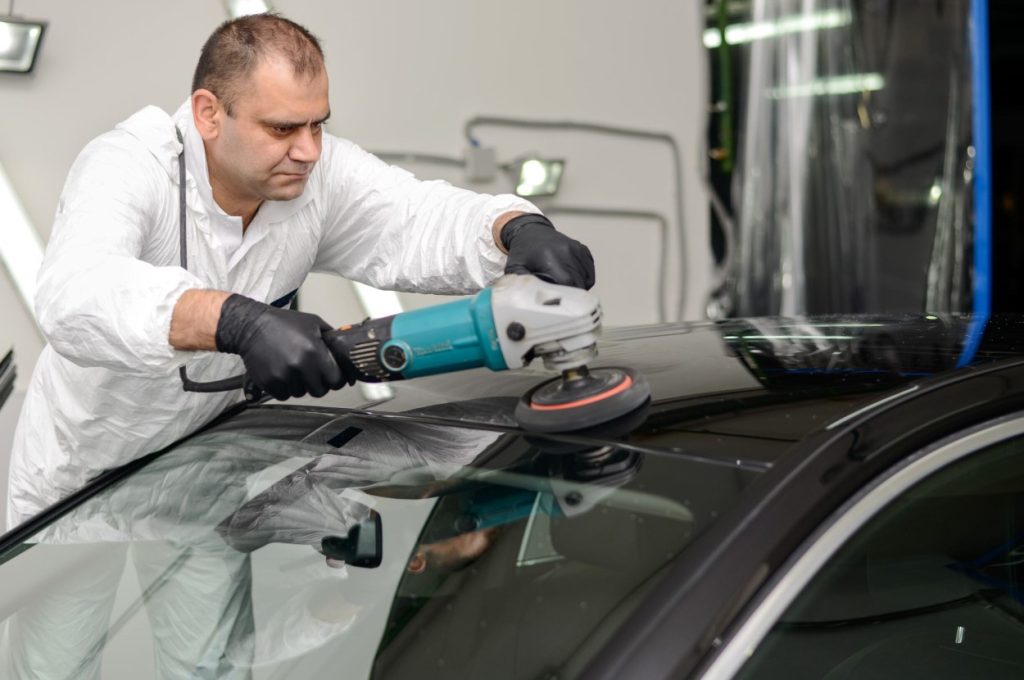
As a Harrisonburg used car dealer, we buy pre-owned cars all the time. We know firsthand that environmental assaults like bugs, dirt, and gravel can affect the looks of a brand new vehicle.
That’s why we’re sharing our tips—some you might not have thought of—to help preserve the luster of your vehicle’s exterior.
Knowing what kinds of polishes to use right from the start as well as how to polish is important. It can help keep swirls, etching, scratches, as well as oxidation to a minimum while maximizing shine. Read on to learn more about car polishing your vehicle.
Car Polishing Know How: Is There Really a Best Car Polish?
Contrary to car polishing ads, there is no one polish to use to give you that deep, new car shine. Sometimes, depending on the condition of the paint, you may need to use two or three products to get the desired results.
That said, the big question we hear is, “How often should I polish my car?” You might not realize it, but paint polishers actually remove small amounts of the paint’s exterior.
It’s microscopic and does not interfere with the integrity of vehicle’s paint film build if not over applied. That’s why you want to polish your car once or twice a year. Wax it every three months or so.
A polish’s cutting ability determines the amount of paint removed with each hand stroke, or with each revolution of a buffer. Waxing enhances the car’s paint coating.
A fine polish creates that enviable deep, wet looking gloss. On the other hand, a course polish can cloud the surface. Each polish is designed for a specific purpose in mind such as repairing or refining the vehicle’s exterior.
It’s not as simple as just choosing a polish product. There are many variables at play. For a new car polish application, you do not have to consider the condition of the paint or its hardness and thickness.
For used cars, that step is essential. For both used and new cars, you’ll also want to consider:
• The products used—don’t skimp!
• Time to apply—don’t rush it.
• The application process
• Work space—make sure your area will allow you to work with ease
• Weather—don’t work when the surface of the vehicle is hot
Types of Car Polish Applications
It’s important to always use the least abrasive polish for the reasons stated above. Here are our recommendations.
For moderate to severe damage—For heavy scratches, swirls and other serious defects, you want to use a cutting pad and a swirl remover. Set the speed to five or six.
For normal swirl, water etching, light scratches, and light to moderate oxidation—Use a lighter cutting pad and a finishing glaze to restore shine.
For extremely light damage—If you just want to enhance the gloss, use a polishing pad and polish enhancer and set the speed to about one to three.
All of these steps are enhanced by using a dual action polisher but can also be done by hand.
Car Polishing Tips and Techniques
We recommend spot testing first on the most damaged area of the vehicle. Use the least aggressive product to start and see how the product performs.
If you’re not satisfied with the results, move up to the next product level and then begin working on the entire car, following these steps:
• Work small areas at a time, about 2 ft x 2 ft
• Work slowly. Allow the polisher to get the work done
• Use overlapping, slow motion. Make them up and down, then side by side.
• Keep the pad level. Focus on the results of the pad application.
• Don’t dry buff—EVER! Once the polish becomes clear, stop.
• To avoid further scratches, if you’re machine buffing, keep the cord away from the work area.
• Use the correct pad, polish, and speed combos—Always!
• When removing defects, don’t use too much pressure. Use just enough to remove problem areas.
• Don’t lift the polisher from the paint area while it’s in use.
It’s important to note that car polishing does not protect your vehicle. It simply helps it to look better. Waxing will help to protect it.
Follow these used car polishing tips and keep your vehicle looking like new!
When you’re ready to buy a quality used car, turn to the pros at Joe Bowman Auto Plaza. We’ve been helping consumers just like you for more than 60 years find the vehicle of their choice.
The New Cadillac CT4: Elegance Refined

In the luxury car market? The new Cadillac CT4 offers plenty for the senses starting with a bold color-and-trim palate that features 11 color exterior options, and eight distinct interior colors including material and trim options.
The CT4 lets you make a statement and stand head and shoulders above the crowd.
With all-wheel drive available on all models, Cadillac leverages its award-winning real wheel architecture, delivering a driving experienced that’s unmatched by its front-end competition.
And, of course, Cadillac incorporates all the latest technologies, including Super Cruise 1. This feature introduces the world’s first hands-free driver assistance going the distance of 200,000 miles of compatible highways both in Canada and the US.
Cadillac CT4 Sleek Design Appeals to Youthful, Luxury Buyers
Cadillac developed the CT4 for youthful buyers in the luxury market who may be new to the Cadillac brand. The vehicle draws appropriate attention using excellent proportions, taut surfacing, and all the Cadillac details that showcase an athletic driving experience.
The CT4 has unique grilles, bright exterior accents, including premium hot foil stampings on the grille elements.
The Sport and V-Series models have darker accents such as unique grilles, rear spoiler and exclusive performance design wheels, and rocker extensions.
CT4 Perfectly Balance Driving
You’re not just driving from point A to point B. You’re driving there in supreme style and comfort.
With near perfect weight distribution, the CT4 is exceptionally balanced creating a highly responsive driving experience. Every element is designed to bring all the innovative technologies to you, the driver, with cutting edge precision.
And that means the CT4 also takes you to your destination with its award-winning real wheel drive sedan architecture.
CT4 Turbocharged Choices
The foundation for the CT4’s lively performance is Cadillac’s proven turbocharged proficiency. The 2.0L Twin-Scroll Turbo engine is standard and SAE-certified at 237 horsepower and 258-pound-feet of torque. Plus, it’s backed by a sophisticated eight-speed automatic transmission.
Standard on the Premium Luxury and V-Series is Cadillac’s new 2.7L segment-first Dual-Volute Turbo engine.
The 2.7L features a three-step sliding camshaft design, just like the 2.0L Turbo engine. It also has:
• Active Thermal Management—This uses targeted engine heating and cooling to improve performance both in hot and cold temperatures.
• Integrated Exhaust Manifold—Recovers heat from the engine for faster warmup and a quicker turbo response.
• Electric Water Pump—An efficient water pump allows for continual cabin heating even with stop and go destinations.
• Tandem Solenoid Starter—Allows for a faster response with stop/start events. Plus, it allows for a smoother drive away.
The Cadillac CT4 is Driver-Focused
To appeal to a new generation of luxury drivers, Cadillac designed the CT4 with a contemporary interior that also incorporates Cadillac’s signature technologies.
For the luxury driver, that means the vehicle’s cabin has been ergonomically optimized. Driver controls are intuitive, and all cabin touchpoints have been crafted for a high tech tactility.
Plus, there are many standard comfort and convenience features such as:
• A keyless entry and push button starting
• HD Rear Vision Camera 2
• Steering wheel is leather-wrapped
• Dual display driver info center is full color
• Stealth mode interior lighting is LED
• Dual zone automatic climate control including dust/particulate, rear seat vents and humidity sensor
• Premium audio system has Active Noise Cancellation
With nimble handling combined with Cadillac’s premium technology, this new generation of luxury drivers will love not only the dynamic and responsive design but an exhilarating driving experience!
Ready to test drive a new Cadillac CT4 and see for yourself? Check out Joe Bowman Chevrolet and our online showroom. Then stop in for a test drive.
How to Care for New Car Paint

When you buy a new car, you want it to look new for as long as possible. There are many ways to do that, but when it comes to the exterior taking care of your new car paint is a must.
Maintaining your car from the very beginning can keep it looking brand new for as long as you own it.
As new car dealers in Harrisonburg, we want to see you get the most for your money. So, when you’re ready to sell, you can retain its value. Here’s our take on new car paint requirements for doing exactly that.
New Car Paint: Washing Your Car
Whether you take your vehicle to a car wash or you wash it yourself, make sure you clean your vehicle regularly. Dirt is the enemy. Washing your vehicle at least once per month is necessary.
Use a high-quality automotive soap and apply with a foam sponge using straight lines, not circular motions.
Don’t let your car air dry as that will leave behind minerals from the water which can be harmful to your paint. Use a microfiber towel, not a bathroom towel, paper towels, or rags. These can leave behind tiny scratches which, over time, will erode the paint.
Use detailing clay to remove the stubborn dirt a car wash won’t. Yes, new cars need this kind of detailing. See more about that here.
Wax Your Vehicle
Besides making your vehicle look like a million bucks, waxing protects the paint. It can also coverup small scratches. We recommend waxing it every 4-6 months. If you live in a harsher climate, you may want to wax your vehicle more frequently.
Protect It from the Sun
Besides pollution, dirt, dust, and chemicals, the sun is your next biggest enemy. Sunlight can fade the paint on your vehicle causing it to look older.
If at all possible, keep your car in a garage or carport or, at the very least, under a shady tree.
Synthetic Coating
A paint sealant, or synthetic coating, is an alternative to waxing. It bonds to the paint on your car to form a protective sealant. This type of coating lasts longer than wax and is applied just as easily.
When you go the extra mile with your new car paint, you reap the dividends. Not only will your auto look great for years to come but you also protect your investment!
When you’re ready to buy a new car. Turn to the Harrisonburg auto dealer that has been helping people for 60+ years. Learn more about Joe Bowman Auto Plaza here.
What is a Good Gas Mileage for a Used Truck?

When you’re ready to buy a good, used truck, one of the biggest questions that comes up is mileage. You want a truck that works well and doesn’t need constant fixing due to wear and tear.
That’s why the number of miles on a truck can—to some extent—be a good barometer of the health of the vehicle. But it’s not the whole picture.
The rule of thumb has been the lower the odometer miles, the better. With gas engines, you want a used truck with under 100,000 miles. But today, that’s not always the case.
If you’re looking to buy a diesel, you want under 200,000. But in both cases, you want to strongly consider the truck’s overall condition.
Buying A Used Truck: Check Wear and Tear
The number of miles a truck has indicates a certain amount of wear and tear on the components. That’s just the nature of a machine. You use it and the parts wear.
So, the question is at what point in a truck’s life will those parts begin to break? In the past, the answer was 100,000 miles. But pickup trucks made after 2010 tend to be sturdier, more robust.
These newer truck systems can withstand more wear and tear. What’s more, there are more lights and sensors that alert the driver when something is wrong.
That’s a good thing because the problem can be corrected more quickly. With quick intervention and prompt attention, it’s possible for a truck to run 200,000 and still be in great shape.
Highway Miles and City Miles: Miles That Matter
There’s the mistaken belief that if a truck was only used for city miles—back and forth to work, taking kids to soccer games, running to the grocery store—the truck is in better condition.
Actually, the opposite is true.
Stop and go short trips take a heavier toll on a vehicle than long miles. An engine performs best when it’s warm which is why a truck with highway miles puts less stress on the engine than city miles.
If you have to choose between a truck with 50,000 city miles and 50,000 highway miles, choose the latter.
Cost of a Used Truck: How Much?
When it comes to pricing a used truck, there’s more to consider than just mileage. You want to look at the age, whether it’s still under warranty, how it was used, and its general health.
That said, the rule of thumb is for every 100,000 miles, the value of a truck is decreased by half, more or less.
Still, in the end, it all comes down to the market. The price of a used truck is always determined by the market, by what a buyer and seller agree upon.
Buying A Used Truck: Is It A Good Value?
The demand for trucks has been high. That means they are not depreciating as much as in past years. Because used trucks are retaining their value, that’s a better investment for you.
Trucks that are three years old with 50,000 miles are so reliable they can go for years without an issue thanks to the increased quality of newer trucks. That’s a great value!
When you’re shopping used car dealers in Harrisonburg, VA, turn to the pros at Joe Bowman Auto Plaza. We’ve been helping customers like you for 60+ years find the car and truck of their choosing. Learn more about us on our website.
Should You Winterize A New Car?

If you bought a new car before 1980, winterizing it was necessary to keep it running in tip top shape throughout the winter.
Today, it’s a different story. New vehicles don’t require extensive winterizing to perform at their best. You can thank advanced auto technology which allows a vehicle to start right up even in the coldest weather with no special care.
However, there are still a few simple tasks you should do before Old Man Winter makes an appearance.
Check Your Battery
Cold weather is hard on a car battery.
The chemical reactions necessary to generate your battery’s power slow down in very cold temperatures. Plus, cold weather means your engine needs more current from the battery to start the vehicle.
Have your mechanic or the certified Chevy service technicians at Joe Bowman Auto Plaza check your battery. They’ll run a battery load test to see if your battery is still strong.
If the battery is good to go, they will clean up any corrosion found on the posts and connections.
Change Wiper Blades. Refill Wiper Fluid
In inclement weather, it’s essential that you can see the road. That’s why you need fully functioning wiper blades and a solid supply of windshield wiper fluid.
Wiper blades are generally good for one year. If yours are looking frayed or worn, change them!
Check Tire Pressure
Check tires to make sure they are properly inflated. For every 10 degree drop in temperature, your tire’s air pressure will drop about 1 psi (pounds per square inch). A properly inflated tire makes the best contact with the road. That’s essential for wintry weather conditions.
Got 4-Wheel Drive? Check It!
Get better traction on icy or snowy roads with 4-wheel drive. Just don’t wait until it’s snowing to check that it’s working correctly. Get your mechanic to ensure that the system engages as it should.
Also, make sure the transmission and gear fluids are at their proper levels.
Anti-Freeze
The mix of water and anti-freeze should be about 50/50 to prevent the radiator coolant from freezing. You can pick up an inexpensive antifreeze tester at your local car parts store and check it for yourself. It’s easy to do.
Change Oil and Adjust Viscosity
The colder it gets, the thicker oil becomes. Thick oil doesn’t circulate well through the engine. That’s why you want to switch it out in the winter to a thinner oil. To know what oil you need for winter, check your owner’s manual.
Check Belts and Hoses
Check belts and hoses for signs of wear and tear. If needed replace. You don’t need your car breaking down in cold weather due to a $10 belt.
And lastly, make sure your car is stocked with emergency supplies. This is a good idea any time of the year. Be prepared all year long!
When you’re ready to buy a new car, look no further than Joe Bowman Chevy and Cadillac new cars sales in Harrisonburg, VA. We’ve been keeping customers happy for 60+ years.
Connect with us

- April 2023
- March 2023
- February 2023
- January 2023
- December 2022
- November 2022
- October 2022
- September 2022
- August 2022
- July 2022
- June 2022
- May 2022
- April 2022
- March 2022
- February 2022
- January 2022
- December 2021
- November 2021
- October 2021
- September 2021
- August 2021
- July 2021
- June 2021
- May 2021
- April 2021
- March 2021
- February 2021
- January 2021
- December 2020
- November 2020
- October 2020
- September 2020
- August 2020
- July 2020
- June 2020
- May 2020
- April 2020
- March 2020
- February 2020
- January 2020
- December 2019
- November 2019
- October 2019
- September 2019
- August 2019
- July 2019
- June 2019
- May 2019
- April 2019
- March 2019
- February 2019
- January 2019
- December 2018
- November 2018
- October 2018
- September 2018
- August 2018
- July 2018
- June 2018
- May 2018
- April 2018